Virtual Reality Rentals South Africa Logo
News

The Future of Remote Work: Can VR Replace Zoom and Teams?

Author

Elisha Roodt

Date Published

A Glimpse into the Next Era of Virtual Collaboration

The sudden shift to remote work during the pandemic turned platforms like Zoom, Teams, and Google Meet into lifelines for global business continuity. Yet, as the novelty wore off, so did our patience with pixelated faces and endless mute button mishaps. The question now buzzing in boardrooms and home offices alike is whether the future of remote work lies beyond the flat grid of video tiles. Virtual reality platforms like Meta Horizon Workrooms and Microsoft Mesh promise immersive collaboration where colleagues appear as avatars, brainstorm in 3D environments, and interact with shared digital objects. But does this represent a revolution or just another passing technological fad? Exploring the benefits and the barriers provides a clearer lens on whether VR might one day eclipse Zoom and Teams as the default workplace meeting ground.

Immersion Beyond the Screen

From Flat Grids to Shared Spaces

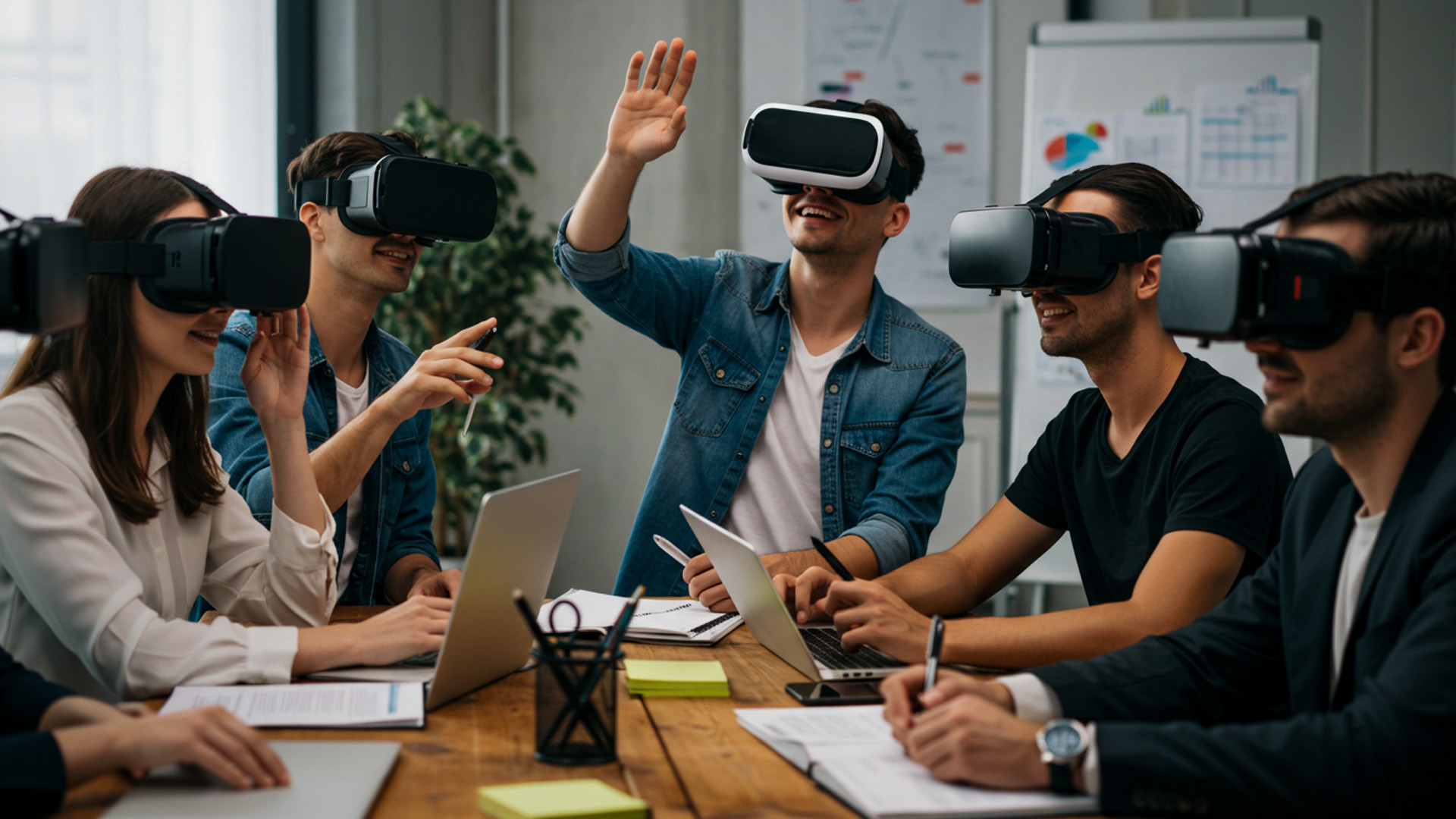
Traditional video conferencing tools confine participants to static windows on a screen, flattening human presence into a two-dimensional grid. By contrast, VR meeting platforms create a sense of co-location, where avatars occupy the same virtual space. The subtlety of turning your head to make eye contact with a digital colleague or leaning forward to examine a shared 3D prototype can generate a surprising level of intimacy. These seemingly small gestures trigger psychological cues that mimic real-world dynamics, making collaboration feel less like a broadcast and more like a genuine exchange. This shift from "watching a screen" to "being in a room" lies at the heart of VR’s appeal.

Consider the metaphor of theater versus cinema. In cinema, the audience passively consumes a performance projected in front of them. In theater, the audience shares the same space as the actors, and the proximity changes the experience entirely. VR attempts to bring the theater effect into digital collaboration. By breaking down the fourth wall of remote work, platforms like Meta Horizon Workrooms give employees not just visibility but presence. This immersion can catalyze creativity and engagement in ways that flat-screen tools simply cannot replicate.

Avatars as Digital Proxies

While avatars may at first feel cartoonish, their function extends far beyond novelty. These digital proxies are designed to capture gestures, eye movements, and expressions, allowing participants to communicate nuance. An eyebrow raise, a nod, or even hand gestures can translate through VR hardware into subtle but powerful signals of intent. This enables meetings to retain the texture of human communication, something often stripped away in conventional video calls where latency and camera angles disrupt flow. Avatars also offer a democratizing effect by reducing emphasis on physical appearance, which can shift focus toward contribution rather than presentation.

Imagine a multinational team where cultural or aesthetic biases often creep into perception. In a VR workspace, those biases fade as attention shifts toward what the avatar says and does, not how the individual appears in reality. The flattening of hierarchies and humanizing of interactions may well be one of VR’s most subtle but profound contributions to the workplace of tomorrow. Yet, there remains a tension: will employees embrace embodying themselves as avatars, or will they resist the abstraction as a barrier to authenticity? The answer will determine adoption speed.

Shared Digital Artifacts

One of VR’s most compelling features is the ability to create and manipulate shared digital objects. In Microsoft Mesh, for example, teams can collaborate on 3D models, diagrams, or even interactive dashboards in real time. Unlike screen-sharing, which forces participants to observe passively, VR transforms collaboration into a tactile experience. A designer might hand a virtual prototype to an engineer, who rotates it, enlarges it, and makes live annotations visible to everyone present. This shared sense of "handling" the same object drives deeper engagement and understanding than simply pointing at slides.

This capability mirrors the effectiveness of in-person workshops, where whiteboards, sticky notes, and physical models often serve as creative catalysts. By digitizing and spatializing these tools, VR collapses the distance barrier while preserving their experiential richness. Still, the complexity of integrating VR-native artifacts into existing workflows remains a hurdle. Companies will need not only hardware but also new cultural habits to fully leverage the medium’s affordances, and that transition may not come easily.

Practical Barriers to Adoption

Hardware Costs and Accessibility

Adopting VR for everyday meetings requires more than just enthusiasm; it demands substantial investment in headsets, peripherals, and compatible infrastructure. While consumer VR headsets like the Meta Quest 3 have become more affordable, scaling across large organizations presents financial and logistical challenges. Outfitting hundreds or thousands of employees with VR gear is not the same as distributing webcams and headsets. Companies must also consider maintenance, training, and device replacement cycles. For smaller firms, the expense may prove prohibitive, delaying adoption until costs fall further.

There’s also the challenge of equity. If only some employees have VR capabilities while others remain confined to traditional video calls, the risk of creating a two-tier workplace emerges. This could inadvertently amplify divides between well-resourced teams and those with limited budgets. History shows that uneven adoption of communication technologies—like the early days of email—can fracture workflows before they unify them. Organizations must weigh whether the benefits of immersive collaboration justify potential inequalities during the transition phase.

Physical Fatigue and Cognitive Load

While VR promises immersion, prolonged headset use introduces physical and cognitive strain. Wearing a headset for extended meetings can lead to eye fatigue, neck discomfort, or what researchers call "cybersickness." Unlike checking email during a Zoom call, VR demands full sensory attention, which can be mentally exhausting. The lack of natural breaks, coupled with the weight of hardware, makes daily VR usage less sustainable than popping into short video calls. For VR to rival the convenience of Zoom or Teams, ergonomics and software design must evolve significantly.

The intensity of immersive interaction can accelerate burnout. Employees accustomed to multitasking during traditional video meetings may find themselves overwhelmed by VR’s "always-on" presence. Consider it akin to attending an in-person workshop for hours every day without reprieve. The richness of the medium becomes a double-edged sword—enhancing focus but also depleting energy reserves faster. Striking the balance between engagement and exhaustion remains a major design frontier for VR collaboration platforms.

Integration with Existing Ecosystems

Zoom and Teams thrive not just because they enable video calls but because they integrate seamlessly with calendars, file systems, and productivity tools. For VR to compete, it must offer similar interoperability. Yet, current platforms still struggle to connect effortlessly with enterprise ecosystems. Uploading and sharing files in VR, syncing with cloud drives, or integrating with project management software often requires additional steps. These frictions may discourage adoption, especially in organizations already invested heavily in streamlined digital workflows.

Think of this as the difference between a universal power adapter and a region-locked plug. If a tool requires too much adjustment to fit into established systems, employees will revert to what works. Until VR becomes as frictionless as clicking a Zoom link embedded in an Outlook calendar invite, its use will remain supplementary rather than primary. The path forward likely involves hybrid solutions where VR augments, rather than replaces, existing platforms—at least in the medium term.

Potential Transformations in Workplace Culture

Redefining Presence and Engagement

In traditional video calls, disengagement is easy to hide. One can turn off the camera, mute the mic, and multitask without consequence. VR, however, demands presence. Avatars mirror real-time gestures, making absence more conspicuous. This shift could fundamentally redefine expectations of participation. In immersive environments, attention becomes visible, and accountability strengthens. While this can enhance collaboration, it also raises questions about privacy and boundaries. Will employees feel pressured to perform constant engagement, or will the visibility foster more authentic connections?

There’s an analogy to be drawn with open-plan offices. Initially touted as collaboration boosters, they also blurred lines between work and personal space, sometimes eroding well-being. VR could follow a similar trajectory—heightening engagement while potentially overexposing individuals. Companies must design norms around digital presence that balance productivity with humane limits. How these norms evolve will determine whether VR workplaces empower employees or inadvertently amplify stress.

Cross-Cultural Collaboration in Virtual Worlds

Global companies often face hurdles in bridging cultural differences during remote collaboration. VR’s avatar-based communication might soften some of these challenges. By focusing on gestures, voice, and shared tasks rather than superficial cues, VR levels the playing field for cross-cultural teams. A Japanese engineer and a Brazilian marketer might find it easier to connect in a neutral virtual space than through traditional video, where cultural formality or camera setups inadvertently create barriers. The shared immersion can foster empathy and cohesion across borders.

Yet, cultural dynamics may also shape how VR is received. In cultures where non-verbal nuance plays a critical role, the current limitations of avatars might feel inadequate. Conversely, in highly individualistic contexts, the abstraction of avatars could reduce comfort with self-expression. The adaptability of VR platforms to accommodate varied cultural norms will be a key determinant of their global adoption. In this sense, the technology is not just technical infrastructure but a cultural artifact requiring sensitive evolution.

Reimagining the Office as a Concept

Perhaps VR’s most radical implication lies in its ability to dissolve the physical office. If employees can inhabit a persistent virtual workspace, location ceases to matter. Digital campuses could replicate the serendipity of hallway conversations while enabling distributed workforces to feel co-located. The implications for real estate, commuting, and even corporate identity are immense. Companies might design branded virtual headquarters where employees "walk" through digital lobbies before joining project rooms, blurring the line between physical and virtual headquarters.

However, the reimagining of the office also challenges our sense of space and belonging. Physical offices serve not just functional but symbolic roles—anchors of culture and identity. A purely virtual office risks feeling ephemeral, potentially weakening ties among employees. Hybrid models, where VR augments but does not replace physical hubs, may provide a more balanced path forward. As with any paradigm shift, the interplay between continuity and disruption will shape how deeply VR transforms workplace culture.

Looking Ahead: A Hybrid Horizon

Incremental Adoption over Abrupt Replacement

Despite the excitement surrounding immersive collaboration, VR is unlikely to replace Zoom and Teams overnight. Instead, incremental adoption will define the trajectory. Forward-thinking organizations may begin with niche applications—design reviews, training simulations, or high-stakes brainstorming sessions—where VR’s advantages shine most brightly. Over time, as hardware becomes lighter, cheaper, and more comfortable, and as interoperability improves, the circle of use cases will expand. For most companies, the next decade will likely see VR complement rather than supplant traditional tools.

History provides a useful parallel. Email did not immediately displace fax machines but gradually became indispensable as infrastructure matured. Similarly, VR collaboration will coexist with legacy platforms until its convenience, cost-effectiveness, and cultural acceptance reach a tipping point. This pragmatic progression reduces the risk of disruption while allowing organizations to experiment and refine best practices. The evolution may feel slow, but it ensures sustainability and inclusivity along the way.

Technological Convergence and Future Ecosystems

The future of remote work will not hinge on VR alone but on its convergence with other emerging technologies. Artificial intelligence, for instance, could enhance avatars with real-time language translation, emotion recognition, or automated meeting summaries. Augmented reality might bridge physical and digital workspaces, allowing employees to toggle between headsets and lightweight glasses. Cloud computing and 5G networks will underpin these experiences, reducing latency and enabling richer environments. VR’s true potential lies in being part of an interconnected ecosystem rather than a standalone tool.

This convergence transforms VR from a niche experiment into a versatile workplace infrastructure. Imagine joining a virtual meeting where AI simultaneously translates a colleague’s speech, while shared AR dashboards update in real time with project metrics. The synergy of these technologies could create workplaces more efficient, inclusive, and dynamic than any single tool could deliver. The narrative shifts from "Can VR replace Zoom?" to "How can VR, AI, and AR collectively redefine remote work?" That broader horizon may be where the real revolution lies.

The Human Factor Remains Central

Amid all the technological speculation, the core truth persists: work is ultimately about people. Tools matter, but culture, trust, and leadership shape outcomes more decisively. VR can amplify collaboration, but it cannot compensate for toxic management or unclear communication. As organizations explore immersive workspaces, they must prioritize human well-being, inclusivity, and agency. A meeting may take place in a sleek digital boardroom, but if employees feel unheard, the platform becomes irrelevant.

Leaders should view VR as an instrument, not a panacea. Its role will be to expand possibilities for connection, creativity, and engagement, but only if wielded thoughtfully. Companies that succeed will be those that align technological adoption with human-centered values. In the end, the future of remote work will not be determined by headsets or avatars alone, but by how seamlessly technology supports the timeless fundamentals of collaboration and community.

A Hybrid Horizon