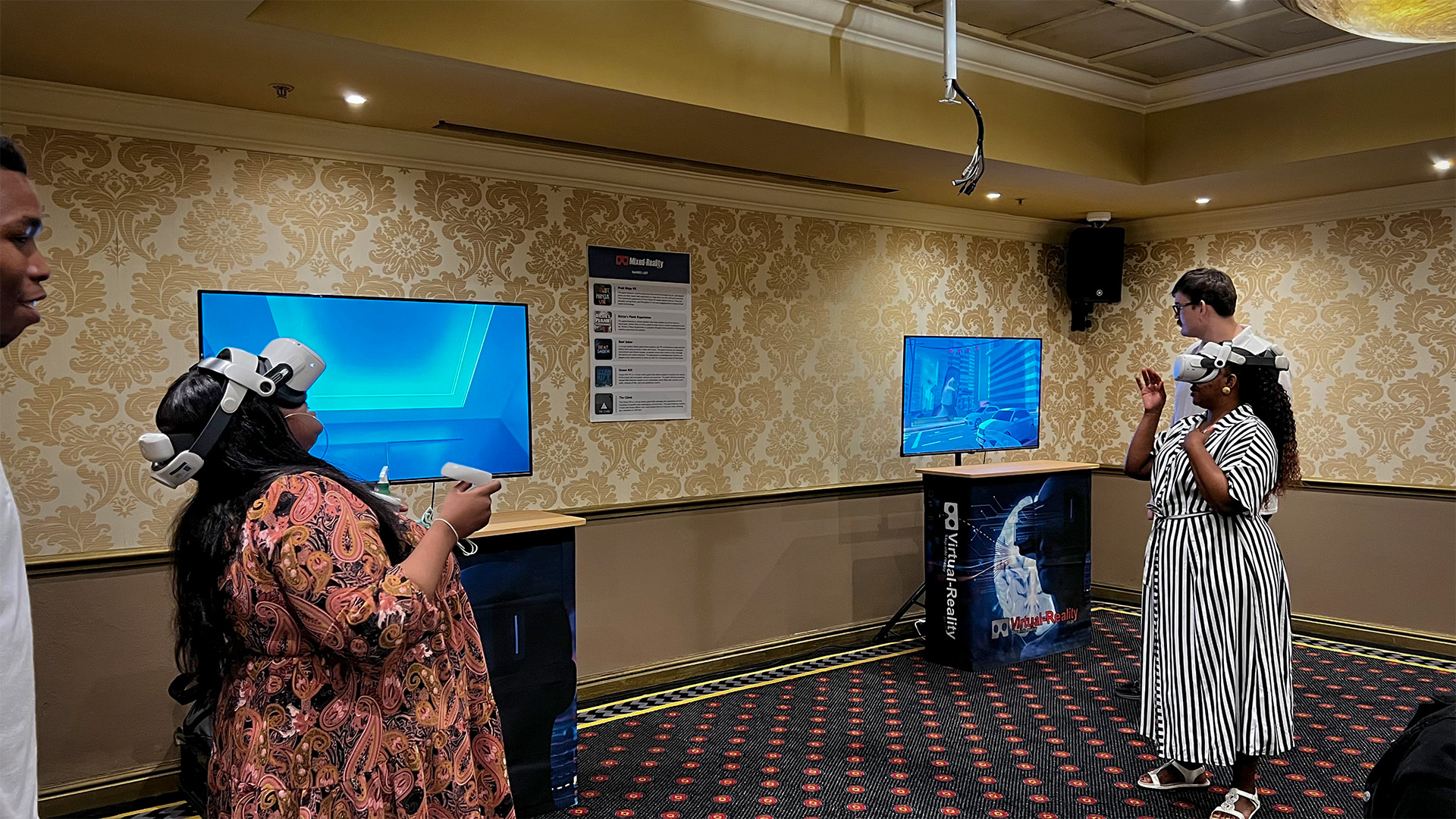
The Role of VR in Sustainability
Author
Elisha Roodt
Date Published

Redefining Connectivity: How Virtual Reality is Pioneering Sustainable Business Practices
As we navigate through 2025, the integration of Virtual Reality (VR) into corporate events has not only transformed the way businesses connect but also significantly contributed to sustainability. Imagine attending a global conference from your home office, engaging with international peers without the carbon footprint of air travel. This scenario is no longer a futuristic dream but a present-day reality, thanks to the advancements in VR technology and the rise of VR rental services.
Revolutionizing Corporate Gatherings with VR
Virtual Conferences: Bridging Distances Sustainably
Virtual conferences have become the new norm, offering immersive experiences that rival physical events. Companies can host large-scale gatherings where participants from around the world interact in a shared virtual space. This shift reduces the need for extensive travel, cutting down on greenhouse gas emissions. For instance, a multinational corporation can now hold an annual meeting with employees from various continents, all connecting seamlessly through VR platforms. The result is a substantial decrease in travel-related carbon emissions, aligning corporate practices with global sustainability goals.
VR conferences enhance accessibility, allowing individuals who might have faced barriers to attend in person—such as financial constraints or physical disabilities—to participate fully. This inclusivity not only broadens the reach of corporate events but also fosters a more diverse and engaged workforce. By leveraging VR, companies are not only minimizing their environmental impact but also promoting a culture of inclusivity and accessibility.
Trade Shows and Expos: A Virtual Marketplace
Trade shows and expos traditionally require significant resources, from booth construction to participant travel. Virtual reality transforms these events into dynamic online marketplaces, where businesses can showcase their products and services without the associated environmental costs. Imagine navigating a virtual expo hall, interacting with 3D product displays, and networking with potential clients—all within a sustainable digital environment.
This virtual approach eliminates the need for physical materials, reducing waste and energy consumption. Additionally, exhibitors can update their displays in real-time, ensuring that the information remains current and relevant without the need for printed materials. The scalability of virtual trade shows also means that more participants can join without the constraints of physical space, fostering greater business opportunities and reducing the overall environmental footprint of these events.
Virtual Meetings: Enhancing Collaboration Without Compromise
Virtual meetings have evolved beyond simple video calls, offering immersive environments where participants can collaborate as if they were in the same room. These advanced VR meetings facilitate more natural interactions, from hand gestures to spatial audio, enhancing communication and productivity. By eliminating the need for business travel, companies can significantly reduce their carbon emissions while maintaining effective collaboration.
VR meetings provide flexibility in scheduling and location, allowing teams to convene without the logistical challenges of coordinating travel. This flexibility not only saves time and resources but also contributes to a more sustainable work culture. As businesses continue to embrace remote and hybrid work models, VR meetings stand out as a pivotal tool in balancing efficiency with environmental responsibility.

The Environmental Impact of VR-Driven Events
Reducing Carbon Footprints Through Digital Transformation
The shift to VR-driven events marks a significant reduction in carbon footprints for businesses. Traditional events involve extensive travel, accommodation, and resource usage, all of which contribute to environmental degradation. By transitioning to virtual formats, companies can drastically cut these emissions. For example, a virtual conference eliminates the need for international flights, which are a major source of carbon emissions. This transformation not only supports corporate sustainability goals but also aligns with global efforts to combat climate change.
Additionally, the energy consumption associated with hosting virtual events is often lower compared to the extensive infrastructure required for physical gatherings. Data centers powering VR platforms are becoming increasingly energy-efficient, utilizing renewable energy sources to minimize their environmental impact. As VR technology continues to advance, the energy efficiency of virtual events is expected to improve further, making them an even more sustainable option for businesses.
Resource Conservation and Waste Reduction
Virtual events inherently conserve resources by eliminating the need for physical materials such as paper, plastics, and promotional items. Traditional conferences often generate significant waste from printed programs, brochures, and single-use items. In contrast, virtual events rely on digital materials that can be easily updated and reused, reducing waste and conserving natural resources.
The virtual nature of these events allows for better resource management. For instance, exhibitors can create digital product showcases that do not require physical samples, saving on materials and transportation costs. This approach not only minimizes waste but also promotes a circular economy, where digital resources can be continuously reused and recycled without depleting finite natural resources.
Energy Efficiency and Sustainable Infrastructure
The infrastructure supporting virtual events is becoming increasingly sustainable, with a focus on energy efficiency and the use of renewable energy sources. Modern data centers are designed to optimize energy usage, employing advanced cooling systems and energy-efficient hardware to reduce their environmental impact. As the demand for VR-driven events grows, the scalability of these data centers ensures that energy consumption remains manageable and sustainable.
The integration of AI and machine learning in managing virtual event platforms contributes to optimizing energy usage. These technologies can predict and adjust resource allocation based on real-time demand, ensuring that energy is used efficiently without compromising the quality of the virtual experience. This intelligent management of resources is crucial in maintaining the sustainability of VR-driven events as their popularity continues to rise.

The Rise of VR Rental Services: Facilitating Sustainable Transitions
Accessibility and Affordability of VR Technology
VR rental services have emerged as a key enabler for businesses looking to adopt virtual event solutions without significant upfront investments. These services provide access to high-quality VR equipment and software on a flexible basis, making advanced technology accessible to a wider range of companies. By lowering the barriers to entry, VR rental services facilitate the transition to sustainable event practices, allowing businesses to experiment with and adopt VR solutions without substantial financial commitments.
Rental services often include technical support and training, ensuring that companies can effectively utilize VR technology for their events. This support reduces the learning curve associated with new technologies, enabling businesses to quickly integrate VR into their event strategies. As a result, companies can leverage VR rental services to enhance their sustainability initiatives while maintaining high standards of event quality and participant engagement.
Customizable Solutions for Diverse Event Needs
VR rental services offer customizable solutions tailored to the specific needs of different events, whether they are conferences, trade shows, or meetings. These services provide a range of VR hardware and software options, allowing businesses to select the tools that best suit their event objectives and participant requirements. For instance, a virtual trade show might require extensive 3D modeling capabilities, while a virtual meeting might prioritize seamless communication features.
This flexibility ensures that VR-driven events can be designed to meet diverse requirements without compromising on functionality or user experience. Additionally, rental services can scale their offerings based on the size and scope of the event, accommodating anything from small team meetings to large-scale international conferences. By providing tailored solutions, VR rental services enable businesses to create effective and sustainable virtual events that align with their unique goals and challenges.
Enhancing User Experience Through Advanced Technology
The user experience is paramount in virtual events, and VR rental services are continually evolving to incorporate the latest technological advancements. High-resolution displays, realistic haptic feedback, and intuitive user interfaces enhance the immersive quality of virtual events, making them more engaging and effective. These advanced features ensure that participants can interact naturally and efficiently, replicating the dynamics of in-person events.
VR rental services often integrate with other digital tools and platforms, such as virtual networking spaces and interactive content management systems. This integration allows for a more cohesive and seamless event experience, where participants can easily navigate through different aspects of the event without technical disruptions. By prioritizing user experience, VR rental services play a crucial role in ensuring the success and sustainability of virtual events, encouraging wider adoption and long-term viability.

Success Stories of VR in Sustainable Events
Tech Innovators' Virtual Summit: A Carbon-Neutral Event
In 2024, Tech Innovators, a leading technology company, hosted its annual summit entirely in a virtual environment. By leveraging VR rental services, they created an immersive conference experience that attracted over 5,000 participants from around the globe. The shift to a virtual format resulted in a 70% reduction in the event's carbon footprint, primarily by eliminating international travel and minimizing the use of physical materials.
Participants engaged in interactive keynote sessions, virtual networking lounges, and real-time product demonstrations, all within a sustainable digital framework. The success of this event demonstrated the feasibility and effectiveness of VR-driven conferences, highlighting the potential for significant environmental benefits without compromising on participant engagement or event quality. Tech Innovators' virtual summit set a benchmark for sustainable event practices, inspiring other companies to explore similar approaches.
Global Health Expo: Expanding Reach Sustainably
The Global Health Expo, an international trade show focused on medical advancements, transitioned to a virtual format in 2025. By utilizing VR technology, the expo not only reduced its environmental impact but also expanded its reach to a more diverse audience. Exhibitors from over 50 countries participated in virtual booths, showcasing their latest innovations without the need for physical travel or shipping of products.
The virtual format allowed for interactive 3D demonstrations and real-time Q&A sessions, enhancing the overall exhibitor and attendee experience. Additionally, the expo implemented analytics tools to track participant engagement and gather feedback, enabling continuous improvement of the virtual platform. The Global Health Expo's successful transition to a virtual format underscored the scalability and sustainability of VR-driven trade shows, proving that environmental responsibility and business growth can go hand in hand.
Financial Leaders' Remote Collaboration: Enhancing Efficiency and Sustainability
A leading financial services firm adopted VR for its internal meetings and client presentations, aiming to enhance collaboration while promoting sustainability. By transitioning to virtual meetings, the firm significantly reduced the need for business travel, resulting in a 60% decrease in travel-related emissions within the first year.
The use of VR facilitated more dynamic and interactive meetings, allowing team members to collaborate in real-time within a shared virtual space. Clients appreciated the seamless and engaging presentation experiences, leading to increased satisfaction and stronger business relationships. This case study illustrates how VR can drive both operational efficiency and sustainability, demonstrating its value as a tool for modern, responsible business practices.

Ensuring the Success of VR-Driven Sustainable Events
Technological Barriers and Solutions
While VR offers numerous benefits for sustainable events, technological barriers such as connectivity issues, hardware limitations, and user accessibility can pose challenges. Ensuring high-speed internet access and robust VR infrastructure is crucial for delivering a seamless virtual experience. Companies must invest in reliable VR hardware and software, often facilitated by VR rental services that provide the latest technology and technical support.
Additionally, addressing user accessibility by offering various VR options, including lower-cost and simplified setups, ensures that all participants can engage effectively. Training sessions and user guides can help mitigate the learning curve associated with new technologies, enabling a smooth transition to VR-driven events. By proactively addressing these technological challenges, businesses can fully leverage the sustainability benefits of VR without compromising on the quality of their events.
Cost Considerations and ROI
Adopting VR for virtual events involves initial costs related to equipment, software licenses, and potential training. However, these costs are often offset by the long-term savings from reduced travel expenses, lower event logistics costs, and minimized resource usage. VR rental services further mitigate upfront investments by offering flexible pricing models, allowing businesses to access advanced VR technology without significant capital expenditure.
The return on investment (ROI) extends beyond financial savings. Enhanced participant engagement, increased event reach, and the positive environmental impact contribute to the overall value proposition of VR-driven events. Companies can also leverage their commitment to sustainability as a competitive advantage, attracting environmentally conscious clients and partners. By carefully managing costs and maximizing the benefits, businesses can achieve a favorable ROI while advancing their sustainability goals.
User Adoption and Engagement Strategies
Ensuring high levels of user adoption and engagement is essential for the success of VR-driven events. Companies must invest in creating compelling and interactive virtual environments that capture participants' interest and encourage active participation. Incorporating gamification elements, interactive sessions, and personalized experiences can enhance engagement and make virtual events more enjoyable.
Additionally, providing comprehensive support and resources, such as tutorials and real-time assistance, helps users navigate the virtual platform with ease. Encouraging feedback and continuously iterating based on user input ensures that the virtual experience meets the evolving needs and preferences of participants. By prioritizing user experience and engagement, businesses can foster widespread adoption of VR technology, ensuring the long-term success and sustainability of their virtual events.

The Future of VR in Sustainable Business Practices
Innovations on the Horizon
As VR technology continues to evolve, we can anticipate even more sophisticated and sustainable applications for virtual events. Advances in haptic feedback, augmented reality (AR) integration, and AI-driven personalization will further enhance the immersive quality and functionality of virtual environments. These innovations will enable more realistic and interactive experiences, bridging the gap between physical and virtual interactions.
The development of energy-efficient VR hardware and the integration of renewable energy sources in data centers will contribute to the sustainability of VR-driven events. As the technology matures, the environmental benefits of VR will become increasingly pronounced, solidifying its role as a cornerstone of sustainable business practices.
Long-term Sustainability Goals and VR's Role
Looking ahead, VR is poised to play a critical role in achieving long-term sustainability goals across various industries. By continuing to reduce the reliance on physical travel and resources, VR supports broader initiatives aimed at combating climate change and promoting environmental stewardship. Companies that embrace VR-driven events position themselves as leaders in sustainability, setting standards for responsible business practices.
The widespread adoption of VR can drive systemic changes in how businesses operate, encouraging more sustainable approaches to collaboration, communication, and resource management. As VR becomes an integral part of corporate culture, its potential to foster a more sustainable and interconnected global economy will be fully realized.
Building a Sustainable Virtual Ecosystem
The future of VR in sustainability hinges on creating a robust and sustainable virtual ecosystem. This involves collaboration between technology providers, businesses, and environmental organizations to ensure that VR solutions are developed and implemented with sustainability in mind. Standards and best practices for virtual events can guide the industry towards more eco-friendly and efficient implementations.
Additionally, promoting digital literacy and accessibility ensures that the benefits of VR are widely shared, enabling diverse participation and fostering a more inclusive virtual landscape. By building a sustainable virtual ecosystem, we can harness the full potential of VR to drive environmental progress and create a more sustainable future for businesses and society as a whole.

The Future Of Vr In Sustainable Business Practices